Ralph C. Michael began Foremost Industries, Inc., a privately owned corporation, in Gettysburg, Pennsylvania, in 1964 ushering in a productive history of building modular homes. The corporation moved to Chambersburg, Pennsylvania later that year hoping to meet growing demands for modular housing. It was Mr. Michael’s desire to provide quality craftsmanship to his customers as well as value. In September of 1965, they once again relocated to Greencastle, Pennsylvania to meet an even bigger demand for high quality homes. Since that move, they opened a new modular plant in Mercersburg, Pennsylvania in 1972 and in Upton, Pennsylvania in 2005. The latter being where they currently build Panelized Homes and Custom Roof Truss(s). They have also opened their own kitchen and bath cabinetry plant in Mercersburg, Pennsylvania.
Modular Home Book Resources Popular Buying Guides for Modular Homebuyers
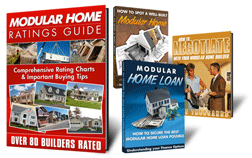
When trying to select a modular home the first place to start is at the factory level. Knowing which factories deliver to your area is the first step in understanding your options. The second and most important step is determining how the factories compare to each other in the areas of: Quality Construction, Design/Style, Appraised Value and Price.
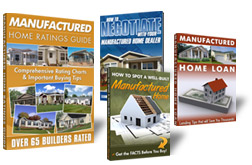
The manufactured housing industry has made some serious improvements in recent years regarding quality construction and residential appeal. With modern day technology and assembly line techniques, the industry is overcoming the misconception that manufactured homes are poorly built and don’t measure up to stick-built homes.
Knowing your financing options is the first step to securing a good deal. We have spoken with hundreds of modular home lenders and Mr. Eaton the author has gone through the process himself. Learn from his insight and you can avoid some common mistakes people make when financing their home.
On average 80% of homebuyers pay too much for their modular home. Not surprising with all the choices one must make from negotiating with your builder to purchasing property and site-improvements. This resource will reveal important negotiating secrets and dealer profit margins that will give you an edge when negotiating with your builder.
Most modular home builders have display models for potential home buyers to walk through. These models are professionally decorated to impress buyers with elaborate decorations, elegant furniture and dazzling floorplans. Aesthetics are important but would you purchase a modular home based on looks and compromise structural integrity? Don’t be fooled by appearances and miss what really matters; “Quality Construction.”
Systems Built Construction In the 1960s, the mobile home industry made an evolutionary split. One branch evolved into recreational vehicles RVs to the point where the house now tows the car. The other branch evolved into manufactured homes, 95 percent of which now become permanent dwellings once they are transported from the factory to the site. Factory built housing is also popular in many countries around the world.
Systems Built Construction Proponents of modular homes have long maintained that the building system produces structures that are far stronger than traditional site built homes. For example, the modular sections are well built to withstand the stresses of highway travel, containing up to 30 percent more building materials than a comparable conventional site built home.
Illinois Factory Built Home Most modular homes are constructed entirely within a controlled climate. Construction continues year round and assembly line workers dont need to be skilled carpenters and are paid about half of what on site contractors are normally paid. Many of the laborers working in the factory built housing industry have steady jobs with benefits and can afford to buy the products they make.